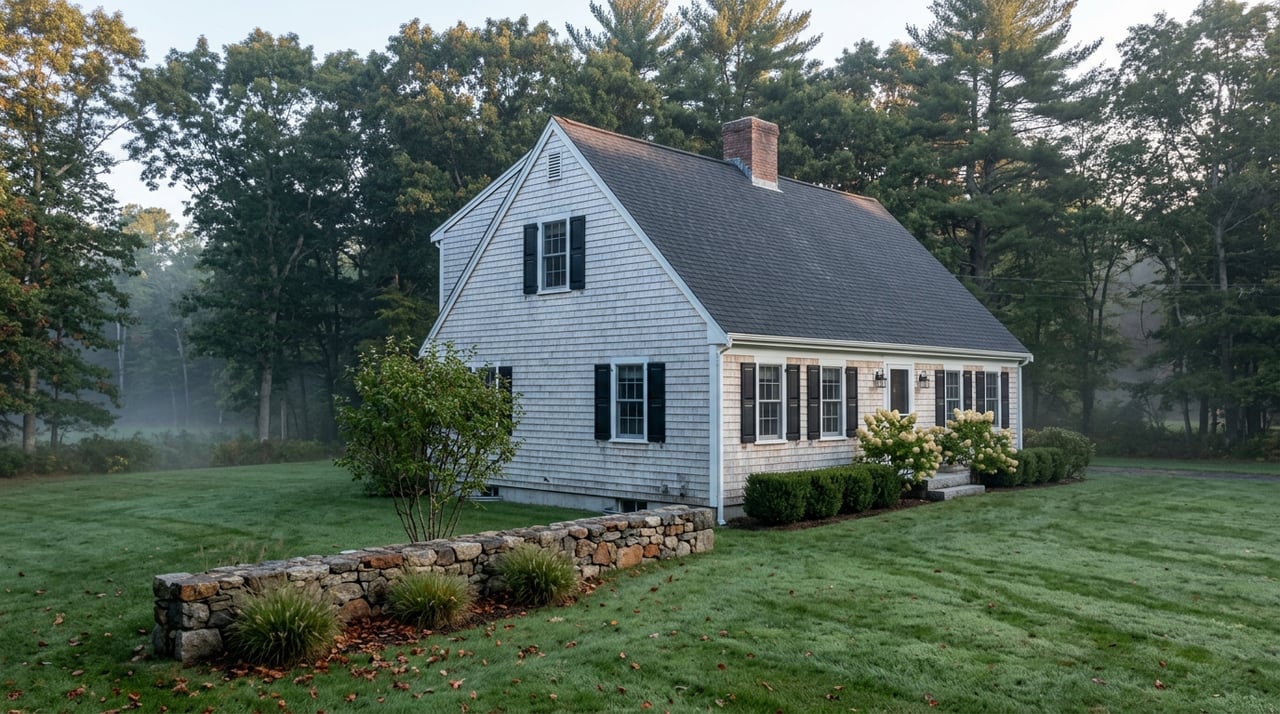
Barrington NH Septic and Well Checks Before You Sell
August 27, 2026
August 27, 2026
When a seller in Barrington pulls together comps for a four-bedroom colonial off Route 125, the septic approval on file with the New Hampshire Department of Environmental Services may say three bedrooms, not four.
Barrington covers close to 49 square miles of woods, farms and shoreline between Dover and Concord, and almost none of it runs on municipal water or sewer. Homes are strung along Swains Lake, Ayers Pond, Long Pond and Mendums Pond, past Caleb's Country Store and the Nippo Lake Golf Club, on private wells and septic systems permitted individually by the state. The New Hampshire Department of Environmental Services says that permit, not the room count an agent puts in a listing description, governs how much wastewater a house is legally allowed to produce. For sellers and buyers here, that single fact changes how a sale actually unfolds.
Under New Hampshire law, a septic system's approved capacity has to be updated before a property owner can add bedrooms, convert a seasonal camp to year-round use, or increase the load on the existing system. That approval is what an appraiser, a lender or a buyer's attorney will check, not the finished bonus room over the garage that a buyer counted as bedroom number four while walking the house.
If the septic file on record shows three bedrooms and the home is marketed as a four bedroom, that mismatch can surface at exactly the wrong moment: during an appraisal. Older Barrington properties add a wrinkle here. State septic records begin in 1967, and the years between 1986 and 2016 are still being digitized into the state's online portal. A seller whose septic predates that window may need to check directly with the town, or with New Hampshire's Subsurface Onestop system, well before a buyer's attorney asks for the file.
As of September 1, 2024, House Bill 1113 changed the requirement. Under RSA 485-A:39, the buyer, not the seller, is now the one required to hire a state-licensed septic evaluator and have the system checked before the property transfers, whenever any part of the system sits within 250 feet of the high-water mark of a qualifying lake or pond, coastal water, or a fourth-order or higher river. The New Hampshire Association of REALTORS says a buyer can accept a seller's existing evaluation instead, but only if it was completed within the prior 180 days and accepted in writing.
In Barrington, that 250-foot rule reaches a meaningful share of the housing stock. Swains Lake, also known locally as Union Lake and spanning about 341 acres, along with Ayers Pond, Long Pond and Mendums Pond, all qualify. So do the stretches of the Isinglass and Lamprey rivers that meet the state's flow threshold. For a seller on one of these shorelines, the paperwork burden looks lighter on paper since there's no assessment due at listing anymore. In practice, the evaluation becomes a closing-day gate controlled by the buyer's timeline instead of a document the seller can hand over on day one. A seller who commissions a current evaluation before listing removes that variable early and gives a buyer something to accept in writing rather than something to discover with two weeks left before the closing table.
There is a further layer for systems that were never formally approved, or that were approved before September 1, 1989. The Union Leader reports that, in those cases, the buyer also has to hire a permitted septic system designer to determine whether the system sits high enough above the seasonal high-water table to avoid being classified as in failure. A failing system must be repaired or replaced within 180 days of transfer.
| Financing path | Is a septic inspection effectively required? |
|---|---|
| Cash | Skipping one is a real financial gamble for the buyer |
| Any waterfront property with any part of its septic system within 250 feet of a qualifying water body | Required under RSA 485-A:39, regardless of loan type |
For a seller weighing whether to get ahead of an inspection before listing, this table is really a buyer-pool question. A home that hasn't been checked in years narrows the field to cash buyers and conventional loans willing to skip the step, which in a market already thin on inventory is not where a seller wants to trim their audience.
A standard septic inspection in New Hampshire typically runs a few hundred dollars, with tank pumping adding to that cost if it's bundled into the same visit. A full replacement runs considerably higher, in the range of $15,000 to $30,000 statewide. On a small Swains Lake or Long Pond lot, that number can climb further. A.J. Foss notes that shoreline parcels under half an acre often can't fit a standard leach field within the required setbacks, which pushes homeowners toward advanced treatment systems designed specifically to reduce the footprint needed near protected water. That's a materially different, more expensive repair conversation than a straightforward pump-and-replace on a larger inland lot elsewhere in town, and it's worth budgeting for before a buyer's inspector delivers the number for you.
New Hampshire's granite bedrock naturally contains uranium, which decays into radon gas that can migrate into both a home's air and its well water. A United States Geological Survey study found that more than half of New Hampshire's groundwater carries a 50 percent or higher probability of elevated radon, and homes in the southeastern and eastern parts of the state test positive most often. New Hampshire sets an advisory level of 2,000 picocuries per liter for radon in water, and treatment for a mitigation system, when needed, typically runs $800 to $2,500.
Roughly half of New Hampshire residents rely on a private well. Almost every institutional buyer tests anyway, since arsenic, radon and similar contaminants have no taste, smell or color. A seller who waits to see if it comes up is really just waiting for the same information to arrive later in the process, closer to a closing date, with far less room to negotiate calmly.
Does a Barrington seller have to fix a failing septic before closing? A failing system must be repaired or replaced within 180 days after the transfer.
What if my home is near water and I already had an evaluation done? A buyer can accept that evaluation in place of ordering their own, but only if it was completed within the prior 180 days and the buyer agrees to it in writing.
What well water testing should I consider before selling in New Hampshire? The state's own guidance recommends a full panel, and most lenders and buyers request one regardless.
Barrington's private systems reward sellers who do the paperwork early rather than the ones who hope it doesn't come up. If you're weighing a listing and want a clear read on how your specific septic file, well history and shoreline distance affect pricing and buyer pool, Lombardi & Co can walk through what's on record for your property and help you get ahead of it before a buyer's attorney does.
This article is general information, not legal, tax or financial advice. Consult a qualified professional about your situation.
Stay up to date on the latest real estate trends.

Buying or selling a home is one of life’s biggest decisions. At Lombardi & Co, we guide you through every step with expertise, honesty, and personalized care. Let’s achieve your real estate goals together.