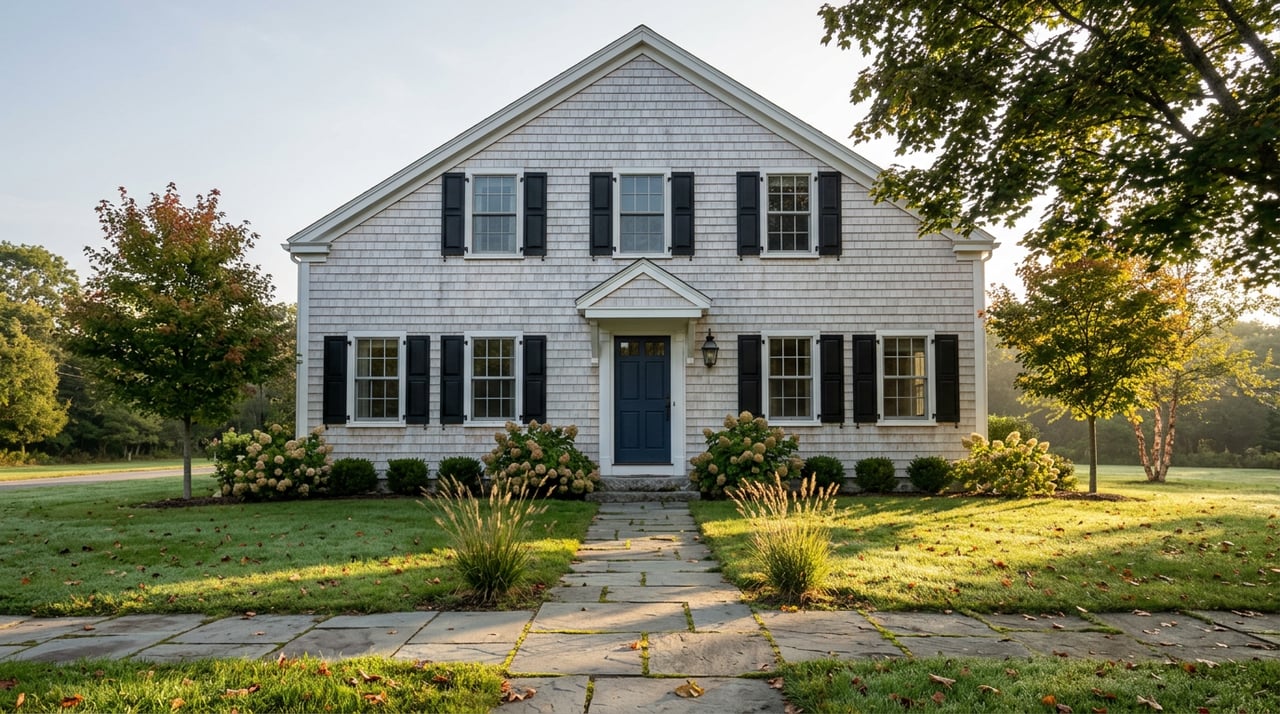
Wakefield NH Fall Events That Signal the Season's Shift
September 10, 2026
September 10, 2026
If you live in Wakefield, you already know the year doesn't end on Columbus Day so much as it stalls there. The Wakefield Marketplace, the farmers market that sets up at Route 16 North and Wakefield Road, has been running since 1995 and closes for the season right around that holiday. It's the town's unofficial signal that summer is finally, actually over.
Except it isn't the only clock running. More than a week before that market packs up its last stand of maple syrup and late tomatoes, the lake starts dropping. Not metaphorically. New Hampshire's Department of Environmental Services lowers Great East Lake by roughly three feet starting around October 1, a managed drawdown timed to protect docks, retaining walls, and shoreline structures before ice season. That means for a stretch of days every fall, the market is still technically open for business while the water most of Wakefield actually orients its life around has already started to recede. Two seasonal signals, running on two different schedules, both telling you the year is turning, neither one waiting for the other.
That mismatch is the actual shape of early fall here. Not a single hinge date, but a short window where the town's calendar and the lake's calendar overlap without syncing.
The Wakefield Marketplace has operated continuously since 1995 under the banner of building community through agriculture and art, and it still reads that way on a Saturday morning: vegetables, fruit, flowers, dairy, maple, baked goods, meat, and crafts, all from the same stretch of Route 16 the market has occupied for three decades. It's the kind of fixture that doesn't need reinvention, and it doesn't get much. The stalls run from Memorial Day straight through to Columbus Day, and as long as they're up, there's an argument that summer hasn't technically ended.
But arguments like that only hold if you ignore what's happening a few miles away on the water.
Great East Lake's water level isn't seasonal in the loose sense. It's managed. The dam sits at the Wakefield-Acton border next to the public boat launch, operated by the state's Dam Bureau, and every October it does the same thing: pulls the lake down about three feet to protect shoreline infrastructure before winter. That drawdown typically begins around October 1, which puts it roughly ten days ahead of the Marketplace's Columbus Day close. If you're on the water, you feel the season end before the farmers market does. If you're in town buying tomatoes, you don't feel it at all until the stalls come down.
This isn't just a curiosity. It's a genuine split in how different parts of Wakefield experience the same October. Lakefront households are already pulling docks and adjusting for lower water while Sanbornville village is still running its Saturday routine as if nothing has changed.
Between the moment the lake starts dropping and the moment the market actually closes, a handful of fixed points carry the town through the transition. Here's how the stretch actually lays out this year:
| Date | What's Happening | Where |
|---|---|---|
| Memorial Day | Wakefield Marketplace opens for the season | Route 16 North & Wakefield Road |
| This past summer | Youth Conservation Corps crews worked erosion control at 15 lakefront properties | Lovell Lake, Pine River Pond, Great East Lake, Province Lake |
| Sept 8 | Wakefield-Brookfield Historical Society's monthly meeting, a talk on the Moffat-Ladd House given by Elaine Carter Blaylock | Gafney Library, Sanbornville |
| Around Oct 1 | Great East Lake drawdown begins, lake drops about three feet | Lakewide |
| Columbus Day (Oct 12) | Wakefield Marketplace closes for the season | Route 16 North & Wakefield Road |
The Historical Society's meeting this week is a good example of how the town keeps its own calendar running underneath the two bigger clocks. The group meets monthly from spring through fall at the Gafney Library, and its current project is restoring the 1858 brick schoolhouse it has owned since 1956, one of the few brick one-room schoolhouses still standing in rural New Hampshire. A New Hampshire Land and Community Investment Program grant of $36,960 is funding the first of three restoration phases, and because LCHIP requires a dollar-for-dollar local match, that single grant is actually pulling close to $74,000 worth of work into a town of a few thousand people.
The watershed work behind the lake drawdown follows a similar pattern of quiet, ongoing effort rather than a single visible event. The Acton Wakefield Watersheds Alliance spent this past season sending Youth Conservation Corps crews to fifteen lakefront properties across Lovell Lake, Pine River Pond, Great East Lake, and Province Lake to reduce erosion before it reaches the water, work funded through a $400,000 NH LAKES grant program spread across six New Hampshire communities using federal ARPA dollars. It's easy to miss if you don't own waterfront, but it's a meaningful part of why the lake can handle a three-foot swing every year without the shoreline falling apart.
The food scene doesn't slow down during this stretch either, and it's worth knowing what's actually open, because most of it isn't set up for a five-day tourist week. It's set up for people who live here year-round.
None of these places changes its hours because the farmers market is winding down or because the lake dropped three feet. They're fixtures the way the market and the historical society are fixtures, which is part of what makes Wakefield's fall feel less like an ending and more like several different endings happening on their own separate timelines.
The real takeaway isn't that Wakefield has a lot going on in September, though it does. It's that the town doesn't actually agree with itself about when the season turns. The market says Columbus Day. The lake says the first of October. The Historical Society keeps meeting at the Gafney Library through both dates, restoring a schoolhouse that has stood since 1858 regardless of what the water is doing a few miles away. If you live on the lake, you're already adjusting docks while your neighbor in the village is still buying corn at the Marketplace. Both of you are right about what season it is. You're just measuring it against different things.
That's a strange, specific way for a small town to work, and it's the kind of detail that doesn't show up until you've actually watched a few Octobers go by here.
If you're one of the people who already lives by one of these clocks, whether that's a lakefront property tracking the drawdown or a Sanbornville address that runs on the market's schedule, and a change in address is somewhere on your horizon, Lombardi & Co knows this town well enough to tell you which calendar actually matters for the property you're looking at.
Stay up to date on the latest real estate trends.



Buying or selling a home is one of life’s biggest decisions. At Lombardi & Co, we guide you through every step with expertise, honesty, and personalized care. Let’s achieve your real estate goals together.